
Middleware for automotive
Connect the software-defined vehicle.
Bring ECUs, computing platforms and applications together. Use Safe DDS for safety-critical communication, Fast DDS Pro for non-safety applications, and bridge DDS with SOME/IP where your architecture needs it.
ISO 26262-certified Safe DDS.
Connect different protocol domains.
Automotive middleware experience.
What your automotive architecture needs
Safety where required. Flexibility across the vehicle.
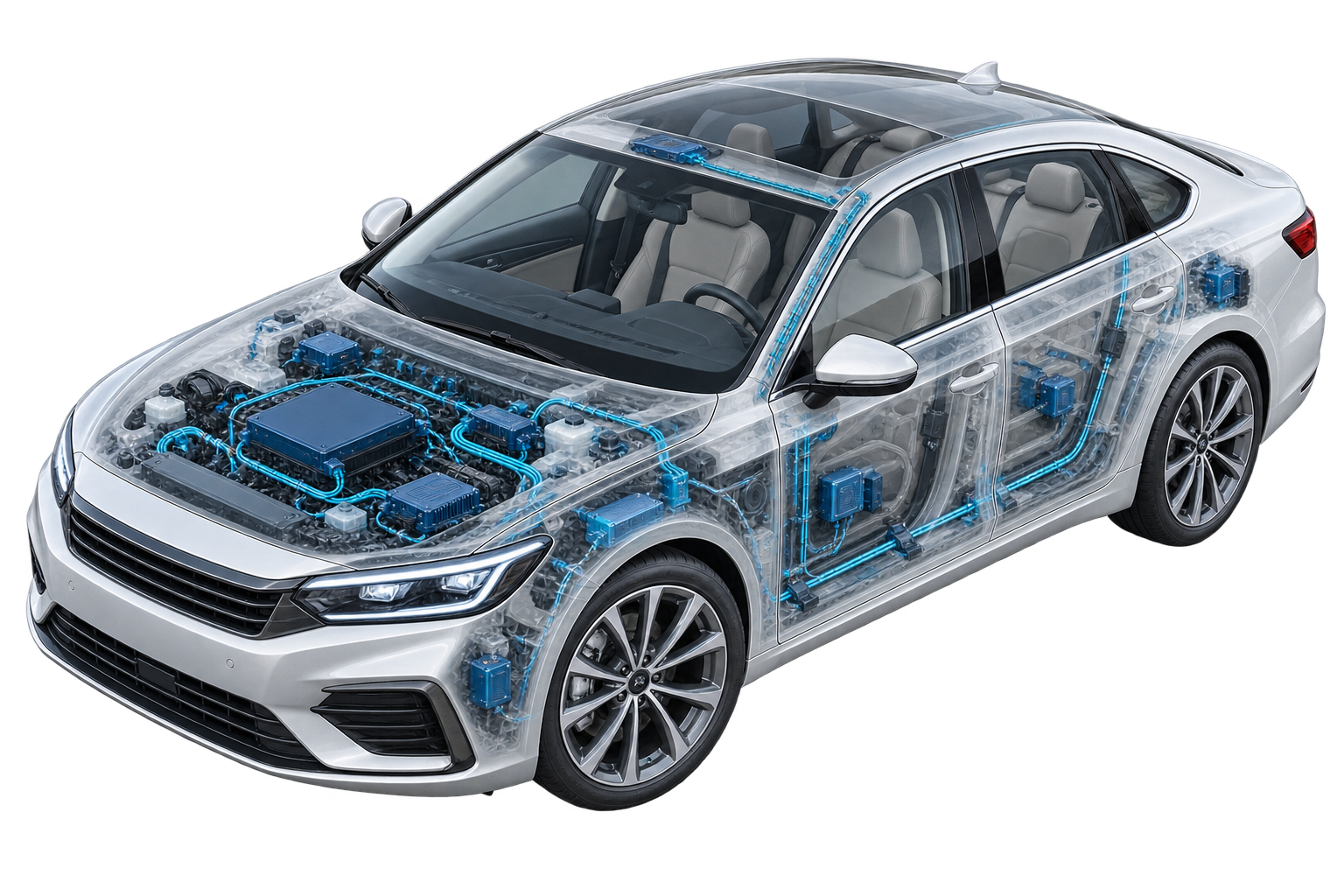
eProsima works with automotive OEMs and Tier-1 suppliers on middleware and integration. We help teams connect distributed software while keeping performance, interoperability and safety requirements in view.

A safety-focused foundation
Build safety-critical communication around certified middleware and its defined scope, with the integration evidence your system requires.

Efficient data distribution
Connect sensors, computing nodes and applications through shared data types and delivery policies tuned to each data flow.
Interoperability across protocols
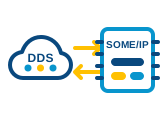
Integrate DDS applications with SOME/IP services using explicit mappings, rather than coupling every application to a single protocol.
Certified for automotive functional safety
Safe DDS.
ISO 26262 ASIL D certified.
Build safety-critical communication on a certified middleware foundation. Safe DDS brings native DDS connectivity to embedded systems, with a safety-focused development lifecycle and supporting product evidence.
ISO 26262 · ASIL D
Independent certification.
A foundation for functional safety.
Safe DDS has achieved ISO 26262 ASIL D certification from TÜV SÜD. Contact us to confirm the certified release and supporting safety documentation for your project.
- A certified foundation for safety-critical communication
- Embedded native DDS connectivity
- Product evidence to support your integration work
Certification applies to the releases, product scope and conditions covered by the certificate and supporting safety documentation. It does not automatically cover newer releases or certify the complete vehicle, application or integration.
Connect the vehicle architecture
From distributed ECUs to zonal and central computing.
Connect software through explicit data interfaces as computing moves across the vehicle. Physical placement, protocol choice and application safety requirements are distinct design decisions.
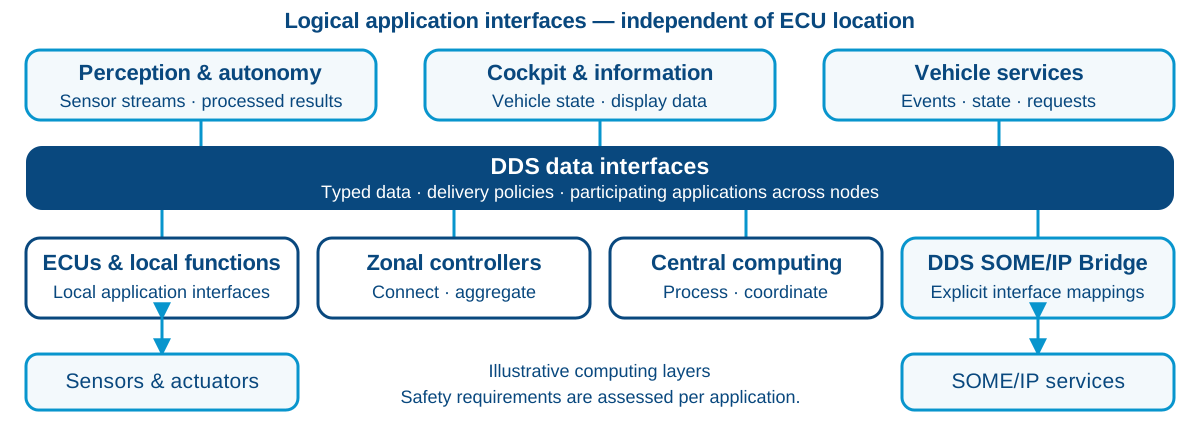
Conceptual diagrams—not physical ECU layouts or certified vehicle designs. DDS participation, gateways and safety boundaries depend on the vehicle architecture.
Automotive applications
A shared data foundation.
Across the vehicle lifecycle.
Connect the data each function needs, from perception and cockpit applications to external systems, testing and ROS 2 prototypes.
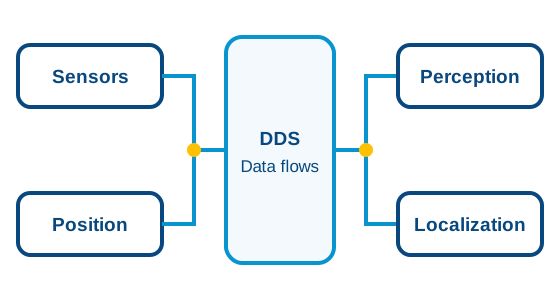
Put sensor data to work.
Connect cameras, LiDAR and perception components with the applications that consume their data. Define delivery policies around each flow’s timing, throughput and safety requirements, from raw streams to processed results.
- Distribute perception and localization data
- Evaluate latency, throughput and resource use
- Choose middleware for each application’s safety needs
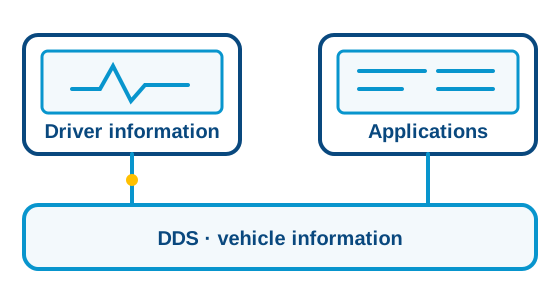
Bring vehicle information together.
Share vehicle state and application data across cockpit components and displays. Define interfaces independently of the screen or compute node, while distinguishing safety-related information from non-safety infotainment functions.
- Connect information sources and display consumers
- Keep application interfaces modular
- Assess safety requirements per function
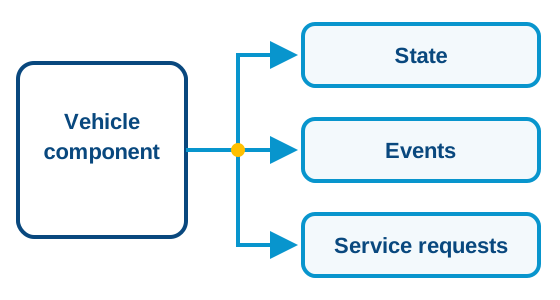
Connect software across domains.
Exchange state, events and service requests between distributed vehicle components. Where DDS applications meet SOME/IP services, use explicit interface mappings to connect the domains while preserving the intent of each exchange.
- Define typed application data and interfaces
- Map supported SOME/IP methods, events and fields
- Plan and validate cross-domain integration
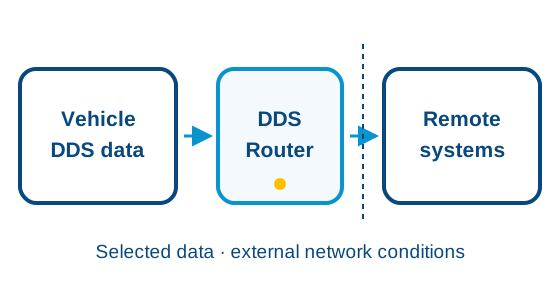
Extend selected data beyond the vehicle.
Connect relevant vehicle data with remote applications and engineering systems. Evaluate routing, bandwidth and recovery under changing network conditions; the connectivity path must reflect the limits of the external network.
- Scope which DDS data crosses the network boundary
- Evaluate DDS Router for the connectivity path
- Test bandwidth limits and interrupted connections
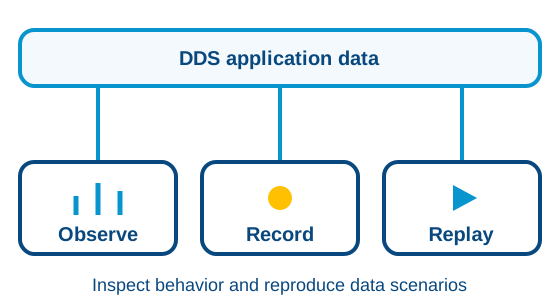
Make communication behavior visible.
Inspect distributed data flows and reproduce recorded scenarios during integration. Connect test components through defined interfaces, using communication evidence to investigate behavior before moving to representative vehicle trials.
- Observe DDS communication with DDS Monitor Pro
- Record and replay application data
- Support integration tests and investigation
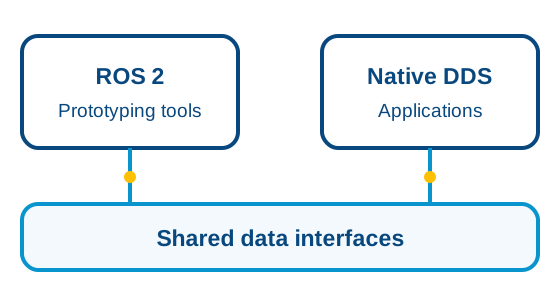
Explore quickly. Plan for production.
Use ROS 2, Vulcanexus and native DDS applications to explore algorithms and data flows. Then evaluate the target hardware, workloads and assurance requirements explicitly to select the middleware and integration approach for production.
- Prototype with ROS 2 and Vulcanexus
- Evaluate performance on representative hardware
- Review production constraints and safety requirements
Beyond passenger vehicles
Connect heavy equipment.
Enable software-defined machines.
Bring software-defined architectures to heavy equipment and off-highway machines with Fast DDS Pro and Safe DDS.

Construction equipment
Connect computing platforms, embedded controllers and machine functions in excavators and loaders.

Mining equipment
Share operational data between onboard applications, monitoring systems and fleet services.

Off-highway machinery
Bring sensors, controllers and operator applications together across specialized mobile machines.
Choose your automotive foundation
Different domains.
The right DDS product for each.
Use a safety-focused implementation where assurance is required, and advanced communication capabilities for non-safety applications. Design the interfaces and isolation measures between them at system level.
COMMERCIAL · ASIL D

For safety-critical automotive applications that need certified middleware, efficient embedded connectivity and product evidence to support their system-level integration and assurance work.
- ISO 26262 ASIL D-certified middleware
- Native DDS for embedded computing platforms
- Professional tools and subscription product support
Commercial

For non-safety automotive applications that need advanced communication capabilities, professional development tools and product support to help teams integrate, observe and evolve their systems.
- Advanced networking and discovery capabilities
- Professional monitoring and development tools
- Product support through a commercial subscription
DDS & SOME/IP in AUTOSAR Adaptive
Two communication bindings.
One integration conversation.
AUTOSAR Adaptive Communication Management supports DDS and SOME/IP network bindings. When both are present in your architecture, eProsima’s commercial DDS SOME/IP Bridge can connect the two protocol domains through configured mappings.
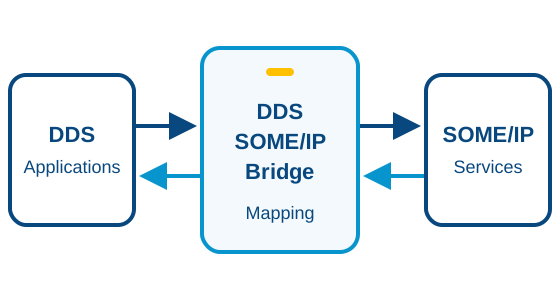
Connect protocol domains without making every application implement both protocols.
COMMERCIAL BRIDGE
Map the interfaces.
Preserve the application intent.
- Support for SOME/IP methods, events and fields.
- Runtime conversion between DDS and SOME/IP payloads.
- ARXML tooling for types and bridge configuration.
Protocol support is not a claim of complete AUTOSAR platform conformance. Bridge mappings and deployment requirements need to be assessed for your project; Safe DDS certification does not extend automatically to a bridge or a connected domain.
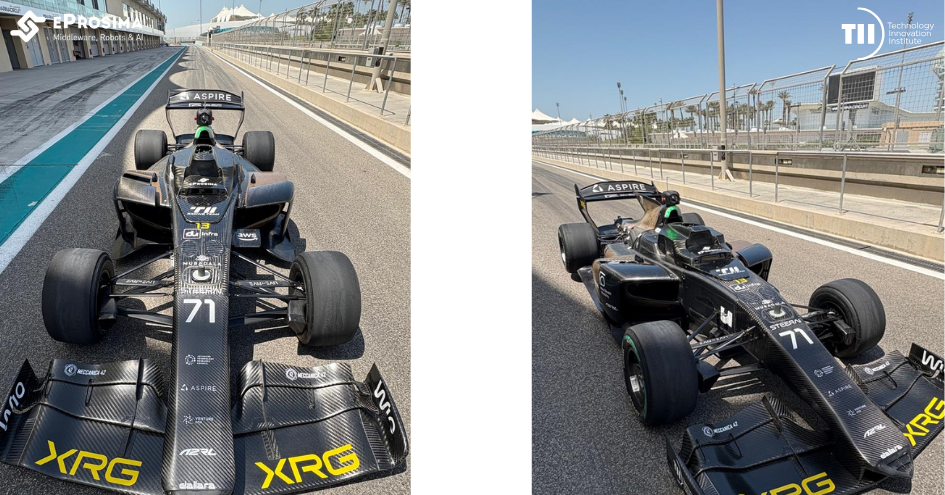
Public engineering reference · April 2025
Demanding autonomous systems. Practical communication experience.
For TII’s autonomous racing vehicles, eProsima helped develop a communication architecture combining ROS 2 with Fast DDS for high-volume camera and LiDAR data, and native Fast DDS for lower-bandwidth tasks.
Data sharing and zero-copy capabilities support the perception data path. This public collaboration illustrates communication engineering under demanding workloads.
Autonomous racing reference, not a claim of series-production deployment or vehicle safety certification.
From development to deployment
Evaluate the architecture.
Prepare the production path.
Turn prototype findings into an integration plan: review requirements, validate representative workloads and scope the production work with eProsima.
Architecture studies
Review application domains, data models, delivery policies and resource constraints before committing to an implementation.
Protocol integration
Define DDS and SOME/IP mappings, connect existing interfaces and scope the engineering work needed for your platform.
Performance evaluation
Measure communication behavior under representative workloads and use the evidence to guide configuration and design.
Architecture studies, consulting and custom engineering are scoped separately from subscription product support.
Talk to a middleware expert
Let’s discuss your automotive project.
Tell us which applications, ECUs and protocol domains you need to connect. We can help identify the right middleware path and a focused integration engagement.
Safety-critical and non-safety application domains.
Distributed computing and vehicle data flows.
DDS and SOME/IP integration.
Product subscriptions and engineering services.