

Middleware for defense
Connect systems.
Enable interoperability.
Bring command and control applications, platform subsystems and autonomy components together with DDS middleware and engineering expertise shaped by real defense programs.
Exchange information across applications.
Connect onboard subsystems and devices.
Connect autonomous systems.
Separate architecture examples. Each has its own integration requirements.
From standards to working systems
More than middleware. Interoperability experience.
eProsima has helped the Spanish Army define interoperability specifications and supported their implementation across C2 and vehicle systems. Our experience also includes supporting the US Navy’s Fast DDS-based implementation of UMAA.

Connect C2 systems
IDT defines common information and communication behavior for interoperable command and control applications. eProsima has contributed to its data model and specification.
Integrate the platform
The Spanish Army’s IDP brings standardized data interfaces to onboard subsystems. eProsima has contributed to the specification and supported implementations.

Build modular autonomy
UMAA defines reusable interfaces for unmanned maritime autonomy. eProsima supports a US Navy implementation built on Fast DDS.
DDS across defense standards
Open standards.
Program-specific requirements.
Find the architecture relevant to your system. Some specifications define DDS data interfaces; others provide a broader framework in which DDS can be used. The shared objective is integration through well-defined interfaces.
A common language for C2.
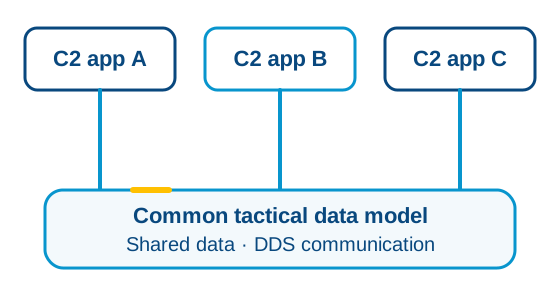
Define what information is shared, what it means and how it is delivered between independently developed applications.
IDT · Spanish Army
The Tactical Data Interface defines a JC3IEDM-based data model and DDS communication profiles for C2 interoperability. eProsima contributed to the model and specification and supports implementations.
The IDT specification is not offered as a public download. Discuss your authorized implementation requirements with us.
Integrate the vehicle, not just the devices.
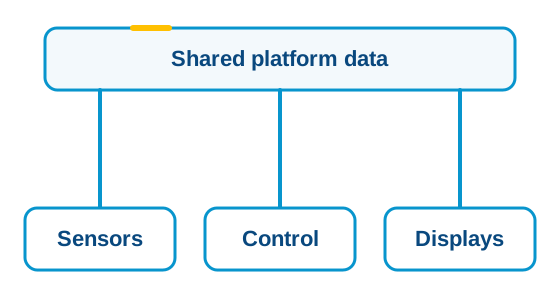
Common data interfaces help integrate electronic subsystems from different suppliers. Each national or NATO profile has its own requirements.
GVA · United Kingdom
DEF STAN 23-009 uses DDS for standardized data exchange within the vehicle architecture.
NGVA · NATO
STANAG 4754 / AEP-4754 defines an open vehicle architecture with DDS-based data infrastructure and a shared data model.
AS GVA · Australia
Australia’s GVA approach uses Australian land data-model and integration requirements. Apply the relevant national profile when integrating DDS.
IDP · Spanish Army
The Platform Data Interface standardizes onboard data exchange. eProsima has contributed to this DDS-based specification and its implementations.
LOSA · Wider land architecture. Land Open Systems Architecture is the broader UK approach within which GVA sits, not a separate DDS wire protocol. UK government context
GVA variants share architectural principles, but are not interchangeable specifications. The Spanish Army IDP specification is not a public download.
Build around reusable software interfaces.
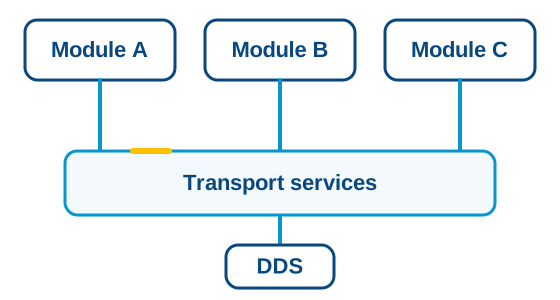
DDS can provide data connectivity within broader open architectures. Transport integration and conformance must be assessed for the selected profile.
FACE · Future Airborne Capability Environment
FACE promotes portable, reusable software. DDS can underpin an implementation of its Transport Services Segment (TSS); DDS alone does not establish FACE conformance.
SOSA · Sensor Open Systems Architecture
SOSA defines modular sensor-system interfaces. DDS and FACE TSS are relevant to software communications; evaluate the applicable SOSA architecture requirements.
These references describe the architecture landscape, not a claim that an eProsima product is FACE- or SOSA-certified.
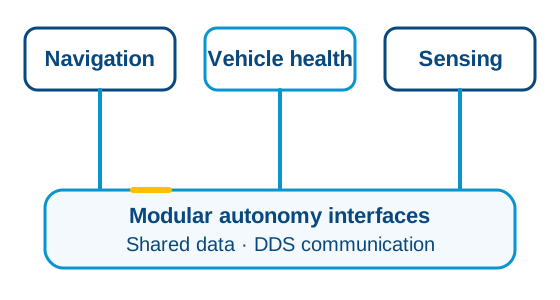
Connect modular autonomy components.
Standard interfaces make it possible to integrate and evolve autonomy software without redesigning every component around a single vehicle.
UMAA · Unmanned Maritime Autonomy Architecture
The US Navy’s architecture defines common autonomy interfaces for unmanned surface and undersea vehicles, using DDS for component data exchange. eProsima supports a Navy implementation based on Fast DDS.
UMAA is not tied to one DDS vendor. The implementation described here does not imply that every UMAA platform uses Fast DDS.
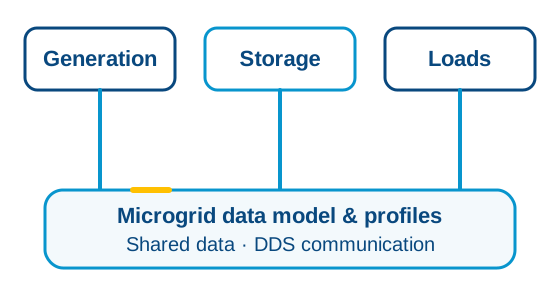
Make power components work together.
Interoperability also matters to the infrastructure that powers a deployed system.
MIL-STD-3071 · Tactical Microgrid Communications and Control
Defines communication and control interfaces for interoperable tactical microgrid components. Its DDS data model and communication profiles support information exchange between generation, storage, distribution and load devices.
Use the edition required by your program. Draft changes and published requirements are not interchangeable.
Experience in real systems
Engineering experience.
In demanding environments.
From national interoperability specifications to maritime software, eProsima contributes middleware and engineering expertise to defense integration programs.
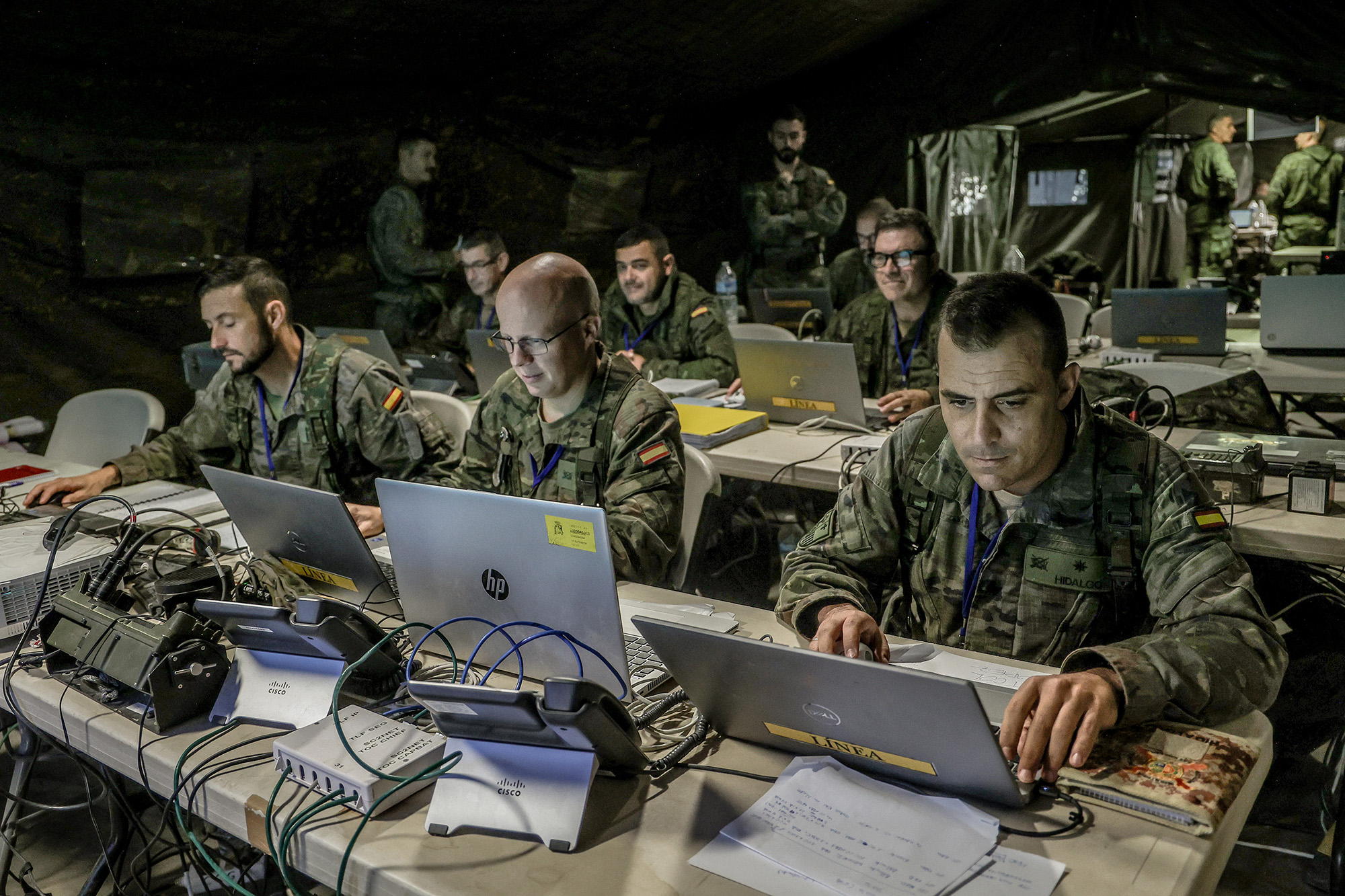
01 · SPANISH ARMY
Interoperability across systems and suppliers
eProsima has helped define the IDT and IDP specifications and supports their implementation. This work connects C2 applications and platform subsystems around shared data interfaces, rather than supplier-specific connections.

02 · US NAVY
A Fast DDS implementation of UMAA
eProsima supports the US Navy’s Fast DDS-based implementation of the Unmanned Maritime Autonomy Architecture. The focus is standardized software interfaces and reusable components for unmanned maritime systems.
Spanish Army photograph: Ministerio de Defensa / Ejército de Tierra, TORO 2022. Reuse conditions (CC BY-SA). Photographs illustrate the operating context, not verified software deployments on the pictured equipment. The appearance of U.S. Department of War (DoW) visual information does not imply or constitute DoW endorsement.
PUBLISHED APPLICATION
iXblue · Forward-looking sonar
The published SeapiX-FLS 5 story describes Fast DDS and shared-memory communication in a ROS 2-based obstacle-detection application.
PUBLISHED APPLICATION
Hexagon & Airbus · Maritime surveillance
Explore the existing public case study on Fast DDS for real-time maritime surveillance and interoperability between applications.
What your defense system needs
Control the communication.
Understand the behavior.
Choose the middleware capabilities and tools around your integration, connectivity and assurance requirements.
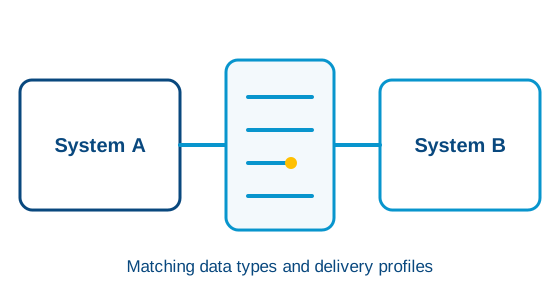
Agree on the data. Connect the systems.
Interoperability needs more than a transport. Align data types, semantics and DDS Quality of Service so independently developed applications can exchange the information they need.
- Implement shared data models and interface profiles.
- Integrate DDS applications across supplier boundaries.
- Validate behavior against your program requirements.
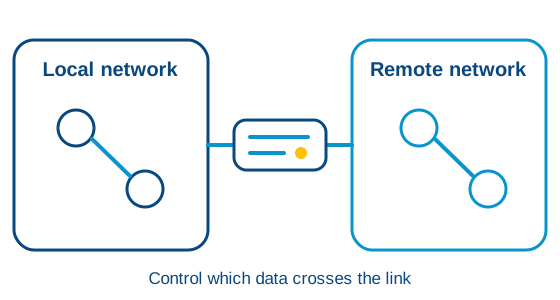
Match the traffic to the link.
A local Ethernet network and a bandwidth-constrained remote link have different needs. Design discovery and data distribution around the connectivity your application actually has.
- Tune delivery behavior through DDS QoS.
- Control discovery traffic with Discovery Server Pro.
- Connect selected data across networks with DDS Router.
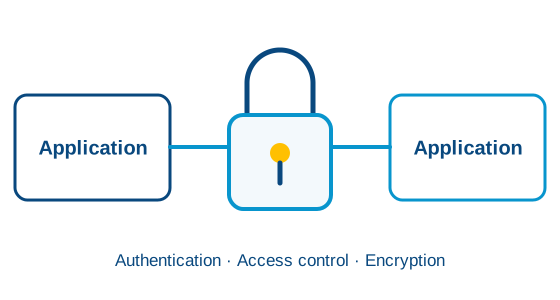
Protect communication by design.
Integrate authentication, access control and encrypted DDS communication into your system’s security architecture. Assess key handling, deployment policy and the protection required for each data flow.
- Authenticate participants and authorize data access.
- Protect DDS traffic using supported security mechanisms.
- Evaluate PKCS#11-backed key storage where required.
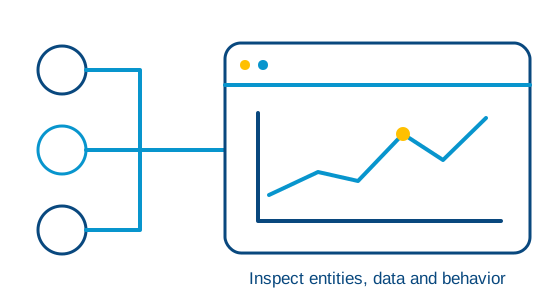
See what your system is exchanging.
Use professional tools to inspect entities and data, investigate communication behavior and reproduce relevant scenarios during integration and testing.
- Observe DDS systems with DDS Monitor Pro.
- Record and replay application data.
- Reconstruct captured RTPS traffic offline where appropriate.
Choose your middleware foundation
The right product.
For each part of the system.
Combine application-level capabilities with an embedded DDS path where needed. Assess product features and assurance deliverables against your program’s requirements.
Commercial

For distributed defense applications that need advanced communication capabilities, professional DDS tools and product support throughout their development and deployment.
- Advanced networking and discovery capabilities.
- Professional monitoring and development tools.
- Product support through a commercial subscription.
COMMERCIAL · ASIL D

For embedded defense applications that need native DDS communication, efficient resource use and safety-focused product deliverables tailored to their assurance requirements.
- Native DDS for embedded devices and controllers
- Interoperability with Fast DDS applications
- Professional tools and subscription product support
Open source

For teams developing directly with open-source DDS middleware, public documentation and community resources, with a commercial product path when requirements evolve.
- Open-source DDS implementation
- Configurable communication and security
- Public documentation and community resources
Product capabilities and certifications have a defined scope. They do not by themselves establish system certification, security accreditation or conformance to a defense architecture.
Engineering your interoperability requirements
From the specification to a validated integration.
Scope the specialist work your program needs, from the data model to system-level verification.

Architecture & data models
Define communication requirements, data types and QoS profiles. Review architecture choices before integration work grows.
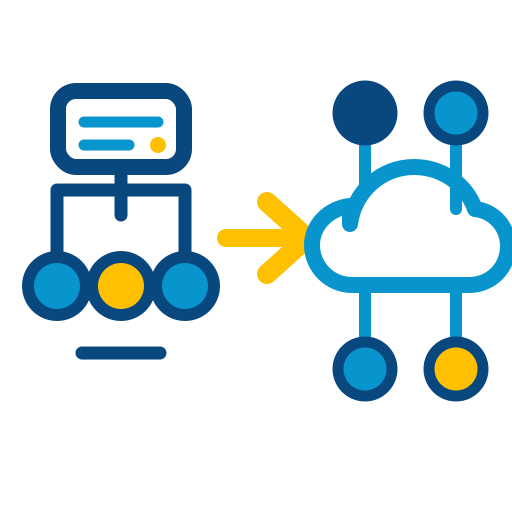
Integration & migration
Connect existing applications, adapt interfaces and plan a transition to a DDS-based architecture around your constraints.
Validation & diagnosis
Plan interoperability tests, inspect communication behavior and investigate the causes of integration problems.
Architecture studies, custom integration and validation engagements are scoped separately from subscription product support.
Talk to a middleware expert
Let’s discuss your interoperability requirements.
Tell us which interfaces, systems and communication constraints you need to address. We can discuss the appropriate product path or scope a separate engineering engagement.
Standards and data-model requirements.
DDS networking and embedded integration.
Interoperability testing and migration.
Product subscriptions and engineering services.